Tell us the room, the ceiling height, and what you are picturing.
What We Offer
Crown molding finishes the line where the wall meets the ceiling. Fitted properly, the eye travels straight past it. Fitted badly, you see gaps at the corners and a wavy line against the ceiling every time you walk in.
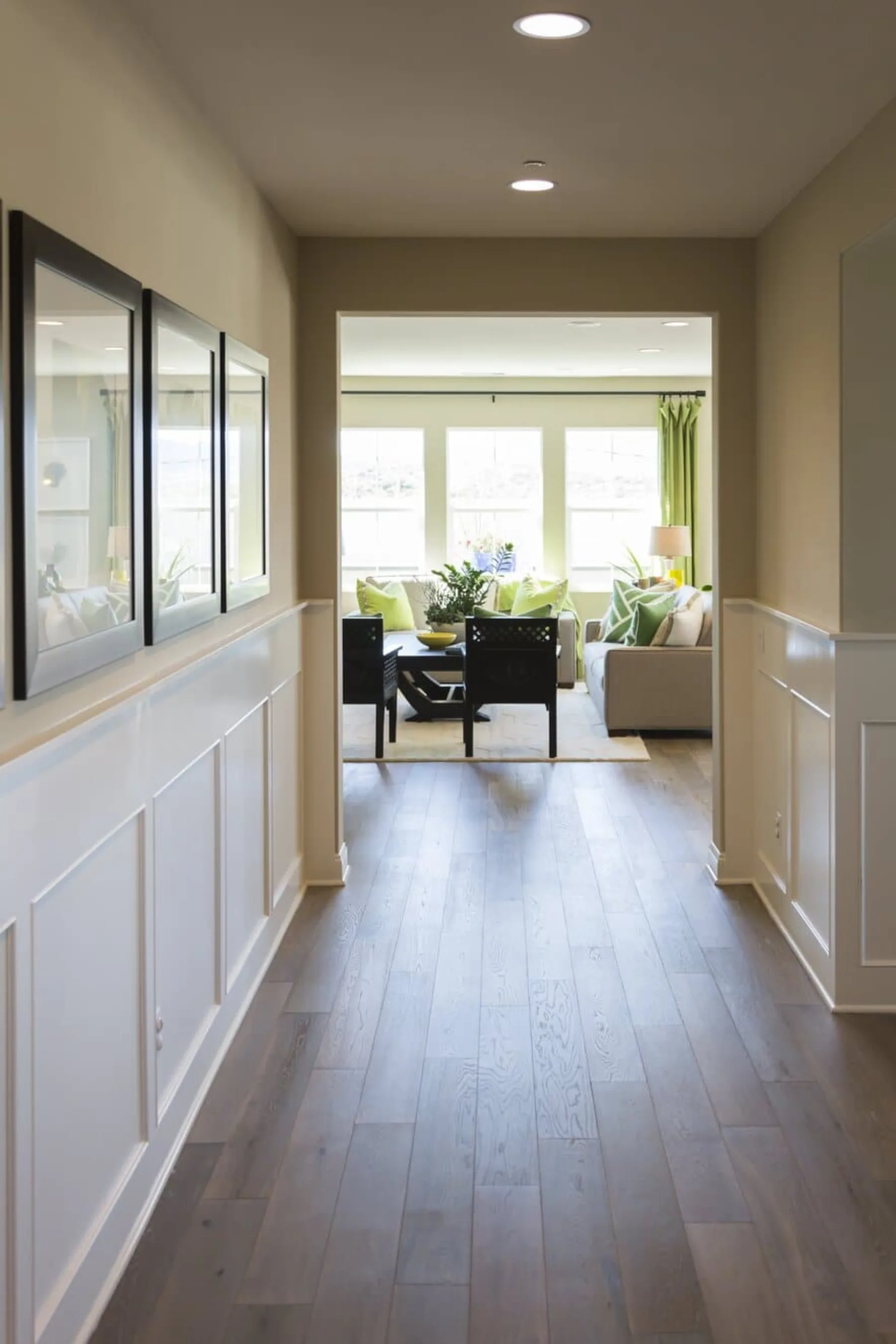
Wainscoting and board-and-batten wall paneling in Tampa, FL, including dark wood finishes. Fitted to walls that are rarely square. Call (813) 605-1621.
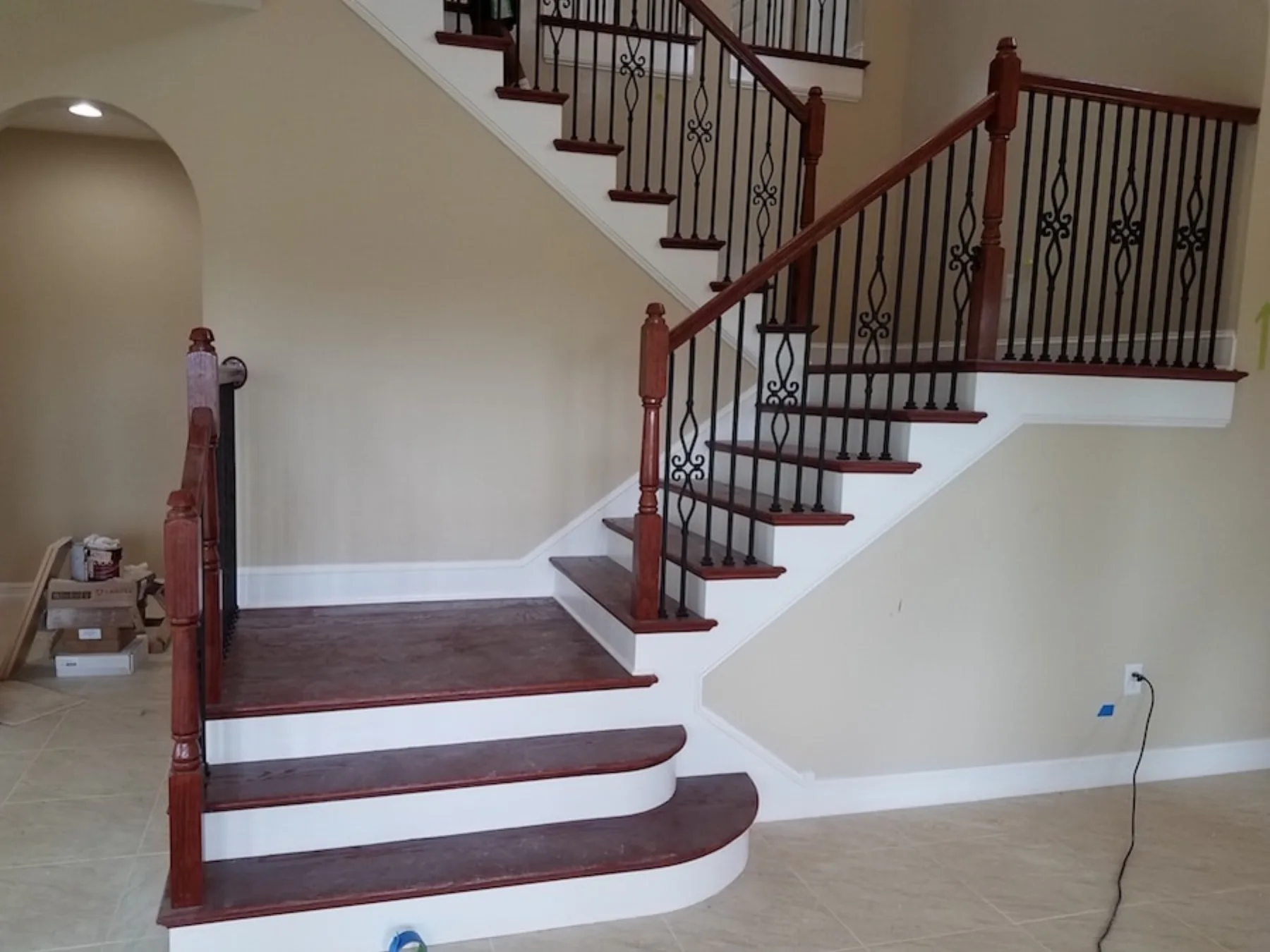
Custom stairs, staircasing and stair treads in Tampa, FL. Rebuilds, re-treads and new runs built to code and to your space. Free estimate: (813) 605-1621.
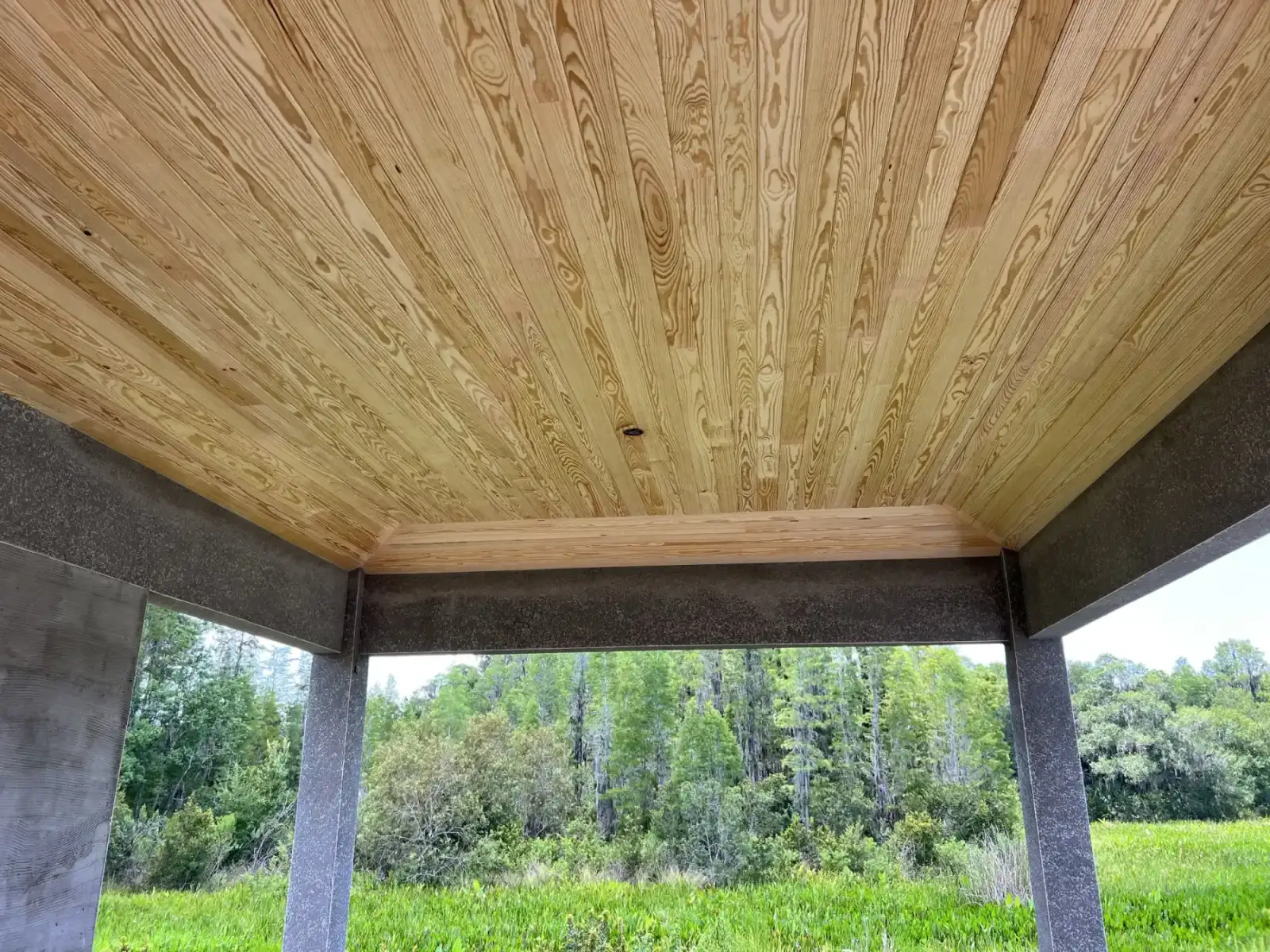
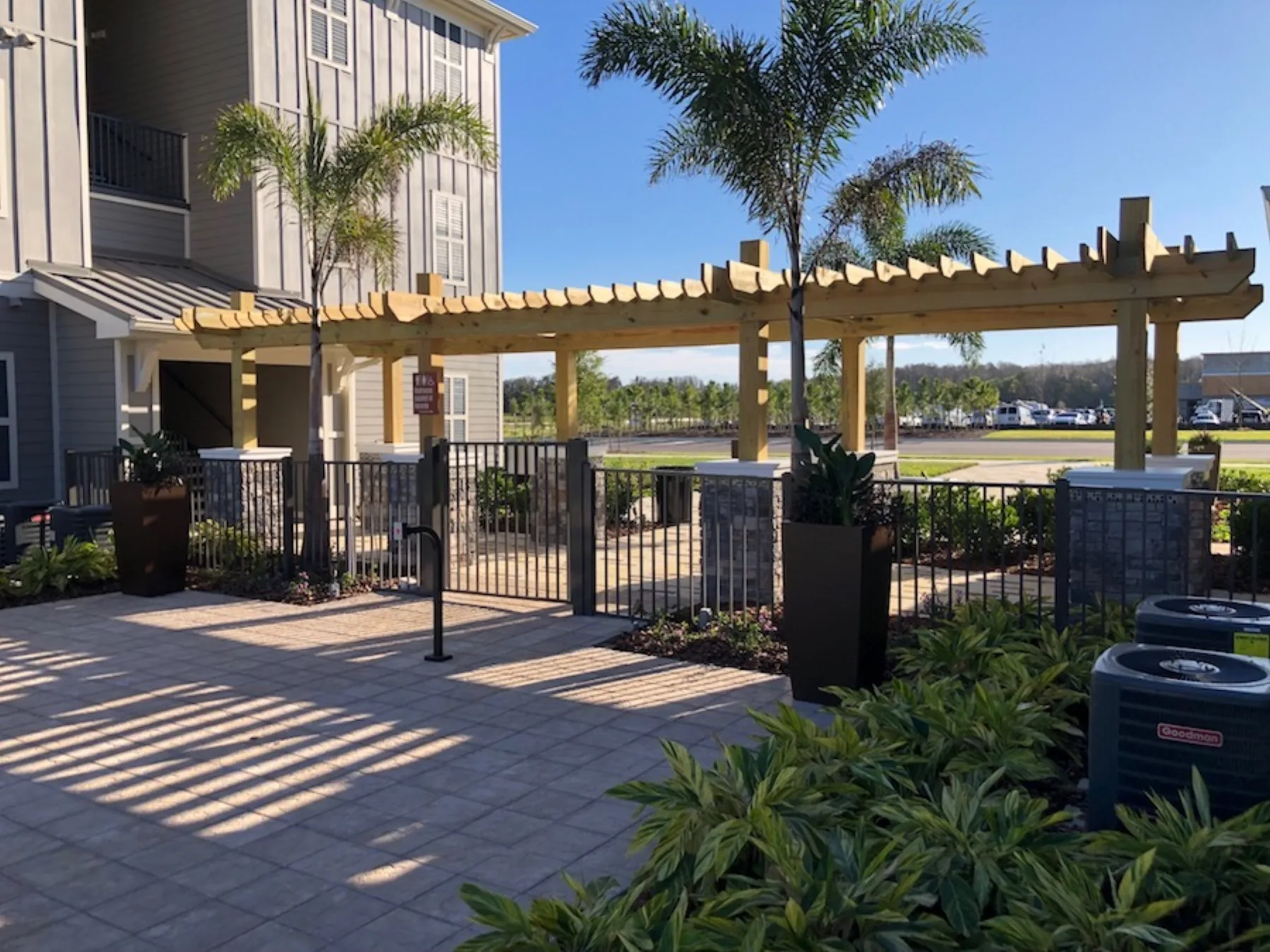
Custom pergola builders in Tampa, FL. Built for Florida sun, wind and rain, with material and footings chosen for the site. Free estimate: (813) 605-1621.
Rough carpentry in Tampa, FL: framing, walls, structural repairs and the work behind the finish. Free written estimate. Call (813) 605-1621.
How We Work
Most of the skill is in the room, not the molding. Walls bow, ceilings dip, and few corners in a Tampa home are a true ninety degrees. Choosing a profile is the easy part; cutting it to fit the room you have is the work.
The size of a profile should answer to the ceiling height, and this is where most DIY crown goes wrong. A two inch strip on a nine foot ceiling reads as an afterthought; the eye needs enough depth at the top of the wall for the line to register. As a working rule, an eight foot ceiling carries a three to four inch profile comfortably, and every extra foot of ceiling can take another inch or so of crown.
Go the other way and a tall profile in a low room eats the wall and pulls the ceiling down visually. We bring samples and hold them up in the actual room, because a profile that looks right on a sample board can disappear or dominate once it is up at the ceiling line.
When a room wants more presence than any single stock profile gives, the answer is a built-up profile: two or three stock pieces stacked to read as one large molding. A common assembly is a cove against the ceiling, a flat band behind it, and a bed molding or dentil course below, with the gaps between pieces creating shadow lines.
Built-up work costs more in labor because every corner becomes two or three joints, but it costs less than having a single deep profile milled to order, and it can be tuned to the room. It suits taller ceilings, large living rooms and stairwells where the molding is seen from below and at a distance.
An inside corner cut as two forty-five degree miters looks perfect on the day it is nailed. Then the house moves. Through a Florida summer the timber swells and shrinks with the humidity, the framing shifts, and a mitered corner opens into a dark wedge you can see from across the room.
A coped corner avoids this. The first piece runs square into the corner; the end of the second is cut back along the profile line so it nests over the face of the first. When the timber moves, the cope rides over the adjoining piece and the joint stays closed. It takes longer per corner, and it is the difference between crown that looks right in five years and crown that does not.
Few rooms are square and few walls are flat. A long wall can bow a quarter inch over its length, and a ceiling can dip where trusses have settled. Crown fixed hard against both surfaces follows those dips, and the eye catches every one, because the molding is a straight reference line running across them.
Textured and knockdown ceilings add a second problem: the high spots of the texture hold the molding off the ceiling and leave a ragged shadow gap. Depending on how heavy the texture is, we either scrape a flat band along the contact line or scribe the top edge of the molding to the surface. A thin, even caulk line finishes the job; a fat bead filling a quarter inch gap is the tell of a rushed install.
Molding comes in fixed lengths and most walls are longer than any one piece, so joints are unavoidable. The wrong joint mid-wall is a butt joint: two square ends pushed together. Butt joints open as the timber shrinks, and they show a vertical line even when caulked.
A scarf joint cuts both ends at a shallow angle so they overlap, which hides the seam, gives more surface for glue, and lets the joint be pinned over a stud. Scarves get placed where the light does not rake across them, and on a long run we plan their positions before the first piece goes up.
For painted crown, primed MDF is a reasonable choice in a conditioned room: it is straight, consistent and takes paint well. Its weakness is moisture. MDF swells if it wicks water, so it is a poor choice near a bath or in any room that is not kept conditioned through the summer.
Solid and finger-jointed pine move more with humidity, which is exactly why the joinery matters: coped corners and scarf joints absorb that movement. In rooms that see real moisture, PVC molding holds its shape and does not swell at all, though it cuts and paints differently. Tell us the room and we will match the material to it.
Yes. We scrape a flat band along the contact line or scribe the molding to the texture, depending on how heavy it is. A thin caulk line closes what is left.
We can finish the molding as part of the job. Say so when you ask for the estimate so it is priced in.
Yes. Single rooms are common, usually a living room or primary bedroom.
A square room with four corners is usually a day including caulk and finish. Tray ceilings, built-up profiles and extra corners add time, which we price into the estimate.
Cove is a single concave curve. Crown is any profile sprung between wall and ceiling, and most profiles combine curves and flats. Cove suits a simpler look; built-up crown suits bigger rooms.
Usually. A photo or an offcut tells us whether the profile is a stock item or one we would build up from two pieces to match.
Let us know whether you want a single profile or a built-up one, and a photo of each corner helps. Call (813) 605-1621 for a free estimate.
Send a photo of the space and the rough dimensions and we will come back with a real number for the work.
(813) 605-1621 2410 E 4th Ave, Tampa, FL 33605
Tampa · Town 'n' Country · Brandon · Riverview · Temple Terrace
We reply fast during working hours.